Pub Theology 10/1/24 -- Hurricanes, floods, and suffering
Peter Trumbore • September 30, 2024

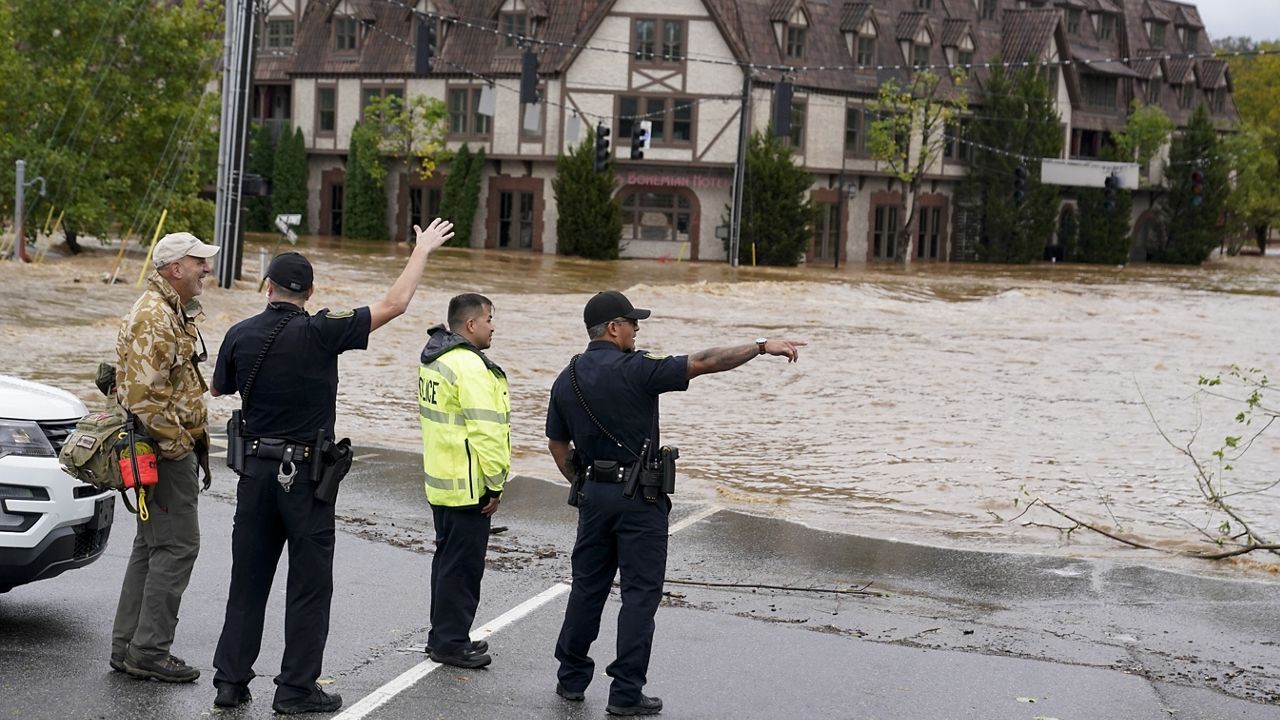
Hurricane Helene brought devastating wind and flood damage to several Southeastern states last week. Especially hard hit were communities in the mountains of eastern Tennessee and western North Carolina, including the city of Asheville.  As of this writing, nearly 90 people have been reported killed across six states, with thousands more displaced. Entire towns have reportedly been "erased" by the power of floods and mudslides, and much of the region remains inaccessible due to destroyed roads and rail lines.


With this in mind, it's worth thinking about one of the great stories of suffering that appears in Scripture. Of course, I'm referring to the Book of Job, which we will start reading next week as part of the Sunday lectionary at St. Mary's. As writer and United Church of Christ pastor Bruce Epperly puts it, the Book of Job is "one of the greatest and most challenging descriptions of both God and the human condition. Job is every man, every woman, and every person who faces unexpected and unanticipated life-changing suffering."


The Book of Job, Epperly suggests, represents an opportunity for us to think about the phenomenon of suffering -- not just ours but that of others as well -- and what that means for our understanding of our relationship with God.


Epperly continues: "Life is difficult. Pain happens. We don’t know its source but we must endure or make the best of it. ...  Job invites [us] to reflect on the universality of suffering. ... No one is immune from suffering of body, mind, spirit, or relationships. It’s only a matter of time. Suffering can ennoble or destroy us. We never fully know our character until we face unwarranted and unexpected suffering. As Viktor Frankl suggests, however, we are called to be worthy of our suffering, and that’s one of the themes of Job. Despite his pain, he must seek to be as moral and noble as possible. For Job, this will mean challenging God’s own justice."


So what are we to take away from all of this? Is God capricious and arbitrary in his omniscience? We might fear such a God, but how on earth could we love or worship him? What is God's role in the suffering we, and others, experience? This is all worth thinking, and talking about, as Epperly notes, "suffering challenges our vision of God and the goodness of the universe."


Join us for the conversation this Tuesday, Oct. 1, beginning at 7pm at Casa Real in downtown Oxford. 
By Andrew Guffey June 7, 2026
This Sunday, all are welcome to join us for a morning of worship and fellowship. Whether you are with us in the sanctuary or joining from afar, your presence strengthens our community. Our service is at 9:30 a.m. We warmly welcome those who cannot attend in person to join us via our live stream.
By Andrew Guffey June 5, 2026
Christians and (Gay) Pride
By Andrew Guffey May 30, 2026
Pope Leo on the challenges of our times
By Peter Trumbore May 26, 2026
Some years ago I was having a conversation with a student when she noticed the Jesus action figure on the bookshelf behind my desk. What, doesn't everyone have a Jesus action figure in their office? Anyway, this led to a conversation about churches and church traditions. She had grown up in the Pentecostal church and asked me what I thought of the practice of speaking in tongues. I told her it wasn't part of my church tradition, but that I understood it as one of the gifts of the spirit that Paul identifies in 1 Corinthians 12:8-10, though I admitted my own skepticism that the way speaking in tongues is typically practiced was actually divinely inspired. And I followed up with a question of my own. I asked whether in her church she had ever encountered someone with the gift of the interpretation of tongues, another on Paul's list. She said she hadn't, though she didn't attach any real significance to that. I was reminded of this conversation in church on Sunday when one of our readings was that very section of Paul's letter. In it he identifies the variety of gifts that the spirit may impart, emphasizing that for all of the differences in gifts, they all come from or flow through the same spirit. Here's Paul's list: utterance of wisdom through the spirit; utterance of knowledge according to the spirit; faith; gifts of healing; the working of powerful deeds; prophecy; discernment of spirits; various kinds of tongues; and the interpretation of tongues. I reading up for this topic, I came across a piece written by a Pentecostal writer who says that when he finds himself in periods of spiritual crisis he prays in tongues for wisdom from God. I honestly have no idea what that means in practice. Perhaps I've not sufficiently opened myself up to receive the Holy Spirit. Or maybe I just don't get it. I suspect I'm not the only one baffled here. So let's talk about it in our conversation this evening. What do you make of Paul's list of the gifts of the spirit? Do you take their meaning literally, or is this more metaphorical and rhetorical? Have you ever experienced any of these gifts firsthand, either in yourself or witnessed in others? If you were coming up with such a list today, what would be on it? Join us for the discussion this evening starting at 7pm at Irish Tavern in downtown Lake Orion. The weather is beautiful, so we may be out on the patio. Look for us there. And a reminder, this is our last meeting before we take our break for the summer. We'll swing back into action in September.
By Andrew Guffey May 26, 2026
This Sunday, all are welcome to join us for a morning of worship and fellowship. Whether you are with us in the sanctuary or joining from afar, your presence strengthens our community. Our service is at 9:30 a.m. We warmly welcome those who cannot attend in person to join us via our live stream.
By Andrew Guffey May 23, 2026
This Sunday, all are welcome to join us for a morning of worship and fellowship. Whether you are with us in the sanctuary or joining from afar, your presence strengthens our community. Our service is at 9:30 a.m. We warmly welcome those who cannot attend in person to join us via our live stream.
By Andrew Guffey May 23, 2026
Over the bent world broods
By Peter Trumbore May 18, 2026
With mid-May upon us, and summer on the doorstep, we are well and truly into spring, typically seen as a season of renewal. A couple of things have brought this to my mind this week. And not just the flowers growing up and around and through the old animal skulls that we artistically left in the chaos garden behind the house when we moved in two springs ago. For context, these used to hang on the wall in the garage at our old house. First, in typical New York Times fashion, their podcast The Daily last week ran a piece on what was claimed to be Americans' "revisiting of religion," and "putting secularism on hold." I listened to the thing, and what it seems to be based on is anecdotal evidence drawn from conversations that the writer of their Belongings newsletter has had with friends, acquaintances, and her family members over the last year or two of her writing the newsletter. Classic New York Times! But still something to contemplate, especially her argument that this turn back to religion is being driven by people's desire for community, connection, and meaning in their lives. Second, and in an echo of our topic of discussion last week, The Washington Post last week ran a piece by a religion professor at the University of North Carolina Wilmington proposing that the government's release of new previously classified material on UFOs was offering support and recognition of a new religion, belief in UFOs. The author writes: "UFO belief is not a religion in the traditional sense. There are no centralized leaders: no popes, no universally recognized doctrines, no sacred text and no institution capable of enforcing orthodoxy. Yet it increasingly performs many of the functions historically attributed to religion. It organizes communities of belief, creates narratives of revelation, offers cosmological meaning and establishes interpretive frameworks through which people understand mysterious experiences and humanity’s place in the universe." A key idea here is that UFO religion is profoundly anti-institutional, built on a foundation of distrust of government, mainstream media, academia, and organized religion. But again, driven by people seeking community, connection, and meaning. Finally, over the weekend there was a White House-sponsored all-day prayer event on the National Mall in Washington D.C. aimed at "rededicating" America as "One Nation under God." Of course it was a decidedly Christian and evangelical version of God that was the focus. Still, thousands showed up and participated. More people looking for and apparently finding some kind of connection, community, and meaning. And a form of renewal at least in the eyes of the organizers and participants in the event. We're going to talk about the idea of renewal in our conversation this week. Are we in a time of spiritual or religious renewal in this country, as the above examples suggest? What would such a thing look like? Would we know it if we saw it? And is it renewal at all, or something different? Join us for the discussion starting at 7pm Tuesday, May 19 at Irish Tavern in downtown Lake Orion.
By Andrew Guffey May 17, 2026
This Sunday, all are welcome to join us for a morning of worship and fellowship. Whether you are with us in the sanctuary or joining from afar, your presence strengthens our community. Our service is at 9:30 a.m. We warmly welcome those who cannot attend in person to join us via our live stream.
By Andrew Guffey May 15, 2026
The Feast of the Ascension